

Stone Separators for Cleaning Grain from Heavy Impurities
Effective equipment for removing stones, metal, glass, and soil inclusions in grain cleaning lines
Stone Separators in the Grain Cleaning Line
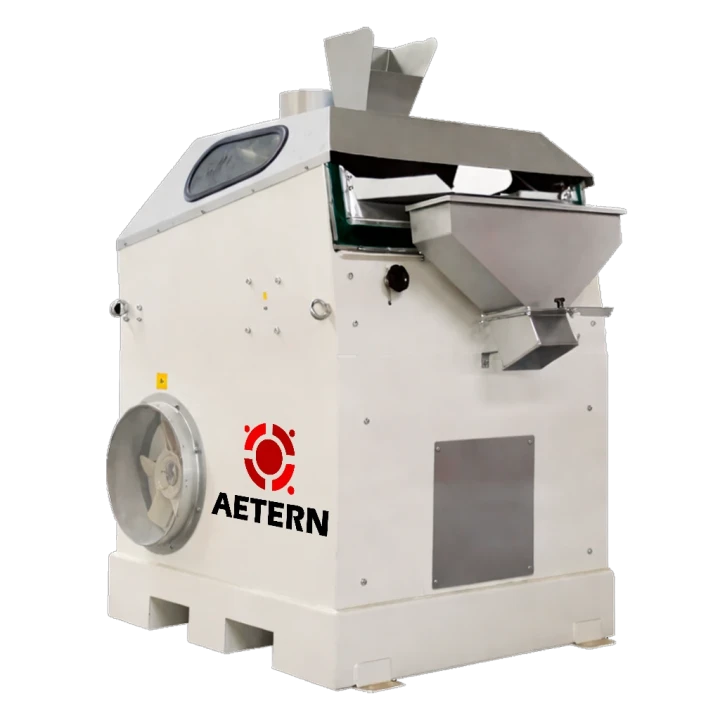
Stone separators are designed for precise cleaning of grain and seeds from heavy impurities, including stones, metal particles, glass, and soil clumps. Such equipment is especially important at stages where stable raw material quality is required before further processing.
Cleaning from heavy impurities is performed on the principle of separating materials by density. This makes it possible to effectively remove contaminants even in cases where the impurities are similar in size to the main product.
In grain cleaning lines, stone separators are usually installed after preliminary cleaning and before hulling, grinding, grading, or other processing operations. Such placement helps reduce the load on subsequent equipment and improve the quality of the finished product.
Stone separators are used in the processing of wheat, corn, barley, legumes, oilseeds, as well as spices and small-seeded products. The equipment is in demand at grain processing enterprises, elevators, and production lines with high requirements for raw material purity.
Principle of Operation and Advantages of Stone Separators
The operation of a stone separator is based on the combination of vibration and air flow. Under the action of air, the grain mass is loosened and transitions into a fluidized state, while heavier inclusions are retained on the working surface and are discharged separately.
This method of separation ensures precise removal of heavy impurities without significant losses of the main product. Stone separators help stabilize the technological process and maintain high quality of raw materials before subsequent processing stages.
The use of equipment reduces the risk of damage to hulling, grinding, and sorting machines. This is especially important for enterprises where the grain cleaning line operates continuously and requires reliable protection of components from abrasive and hard inclusions.
Modern stone separators can be equipped with an adjustable air supply system, precise vibration mechanics, and automated control. Depending on production requirements, standard, semi-automatic, fully automatic, and two-deck models are used.


Choose the right solution
Explore our product groups to find equipment that fits your needs.
Loading Products