
Logo
+90 537 731 38 61
info@aeterninvento.com
ул. Эмануила Манолова, 23А / Варна, Болгария / 9010
  • Home
  • About Us
    • About us
    • Our story
    • Certificates
    • Our services
  • Our Products
  • Contact Us
site_title

navigation

  • Home
  • About Us
    • About us
    • Our story
    • Certificates
    • Our services
  • Our Products
  • Contact Us

CONTACTS

  • +90 537 731 38 61
  • info@aeterninvento.com
  • ул. Эмануила Манолова, 23А / Варна, Болгария / 9010

follow_us

Select Language

  • EN English
  • RU Русский
  • UA Українська
  • BG Български
  • RO Română
  • SR Српски

    Grain cleaning lines

    Complex technological solutions for step-by-step cleaning and sorting of grain raw material to the required level of purity and uniformity

    Integrated grain cleaning systems

    The grain cleaning line is a complete technological system designed for processing agricultural raw materials through a sequence of specialized machines. Each stage performs a specific type of separation, allowing the product to achieve the required level of purity, homogeneity, and quality for storage, processing, or sowing.

    The system operates on the principle of stepwise separation based on the physical properties of the grain — size, aerodynamic characteristics, density, and length. This approach ensures that each type of impurity is removed under optimal conditions, providing maximum efficiency of the entire process.

    No single machine is capable of solving all the tasks of separation at the same time. That is precisely why the sequential organization of the technological flow is a key factor in obtaining grain of the highest quality—whether for food, seed, or feed purposes.

    We offer grain cleaning lines designed with consideration for the characteristics of the raw material and the requirements for the final product. Each solution is adapted to the client’s specific tasks, ensuring stable and predictable operation throughout the entire service life.

    Grain cleaning lines

    Logic of constructing the technological process

    The design of a grain cleaning line begins with an analysis of the characteristics of the raw material and the determination of the requirements for the final product. The technological flow is built in such a way that each stage prepares the material for the next, sequentially improving its quality.

    The separation methods are applied in a strict sequence: size classification, separation by aerodynamic behavior, sorting by density and length. Each stage solves its specific task without duplicating the functions of the other machines.

    Such a gradual approach ensures high overall line efficiency, since each piece of equipment operates in its zone of maximum productivity. Impurities that cannot be separated at one stage are reliably removed at the subsequent stages.

    A properly constructed sequence of operations makes it possible to minimize losses of marketable grain while maximizing the removal of foreign impurities, which directly affects the profitability of the entire grain cleaning complex.

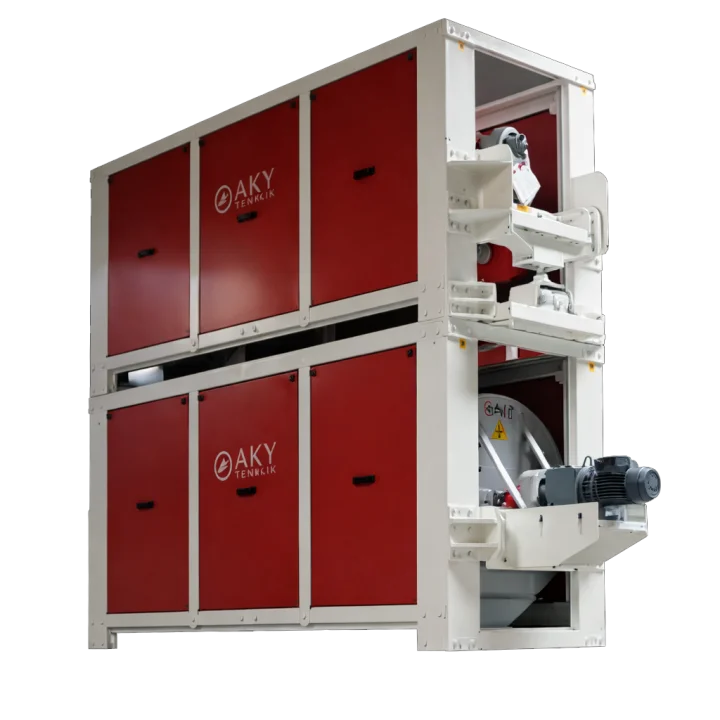
    Grain cleaning lines Detail 1
    Grain cleaning lines Detail 2

    Pre-cleaning of the grain

    The initial stage of the technological process is aimed at removing large and coarse impurities that could damage the equipment or disrupt the stability of the line’s operation. At this stage, mechanical separation is carried out with the help of screening systems, which remove impurities, large fragments of straw, and other foreign inclusions.

    Simultaneously with the sieve cleaning, an aspiration system operates, which extracts light particles—dust, chaff, husks, and husk fragments. The airflow is adjusted depending on the type of crop and the degree of contamination of the initial material.

    Pre-cleaning stabilizes the material flow and protects the subsequent equipment from excessive load and contamination. Without this stage, proper operation of the fine-cleaning machines is impossible.

    The quality of pre-cleaning directly determines the effectiveness of all subsequent stages, so the proper selection of equipment and the adjustment of parameters at this stage are critically important for the entire line.

    Fine cleaning and calibration

    After preliminary cleaning, the granular material proceeds to the stage of more precise separation using multilayer sieve systems. These machines classify the particles by width and thickness, forming structured product fractions.

    At the fine cleaning stage, the bulk of unwanted impurities is removed — small weed seeds, broken grain, mineral particles, and other inclusions. The multilayer sieves ensure high separation accuracy.

    However, impurities that have geometric dimensions similar to those of the target grain can remain in the product after sieve separation. To separate them, other separation methods are required — by density or particle length.

    Calibrating the grain at this stage creates the foundation for the efficient operation of the subsequent machines, ensuring uniformity of the fractional composition and stability of material feed at each next stage.

    Grain cleaning lines Detail 3
    Grain cleaning lines Detail 4

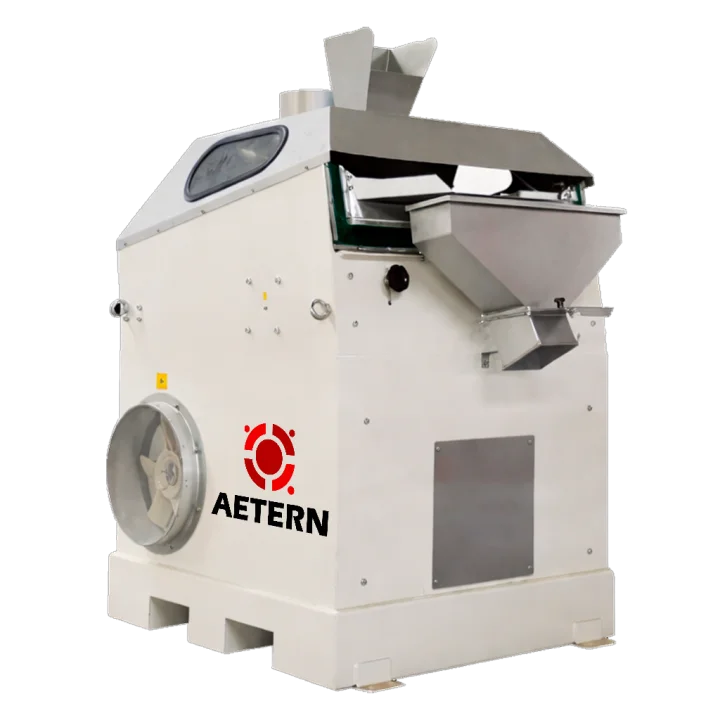
    Separation by density

    Separation by specific gravity is applied after the completion of classification by geometric parameters. The material is fluidized with an upward air stream, which allows the particles to stratify according to their density.

    The heavier and fully developed grains move in one direction, while the light, poorly developed, or damaged particles are diverted in another. Pneumatic sorting tables provide high accuracy in such separation.

    This stage is critically important for improving product quality, especially in applications where the internal integrity of the grain matters — in the preparation of seed material, the production of grain products, or in flour milling processing.

    Density separation makes it possible to remove impurities that do not differ from the commercial grain in size, but have other physical characteristics — grains affected by diseases, unripe, or infested by pests.

    Separation by grain length

    Length separation is carried out with the help of rotating cylinders with internal cells—trieurs. The particles are caught and rejected selectively depending on their length, which allows both shorter and longer impurities to be separated.

    This separation method is particularly effective for removing impurities that cannot be removed in sensory systems—for example, wild oats from wheat, broken grain, or seeds of certain weed species.

    Triple sorting significantly increases the uniformity of the product and is especially important for crops where stability of dimensional characteristics is required — in the preparation of seeds from higher generations or premium-quality food grain.

    The correct adjustment of the cylinder rotation speed and the selection of the cell size determine the efficiency of this stage. Modern triers allow operational reconfiguration when switching from one crop to another.

    Grain cleaning lines Detail 5
    Grain cleaning lines Detail 6

    Separation of stones and removal of heavy impurities

    The removal of high-density impurities — stones, mineral particles, and metallic fragments — is carried out using a combination of vibration and a controlled airflow. The material behaves like a pseudo-fluidized layer, allowing the heavy particles to separate and be removed separately.

    Stone separators provide reliable protection for downstream equipment from damage and premature wear. Even small stones that enter roller mills or crushers can cause serious damage and downtime.

    In addition to the protective function, this stage prevents mineral inclusions from entering the final product, which is a mandatory requirement of food safety and quality standards.

    The efficiency of stone separation depends on the proper balance between the vibration parameters of the surface and the speed of the airflow. Modern equipment allows precise adjustment of these parameters for different crops and fractions.

    Additional processing stages

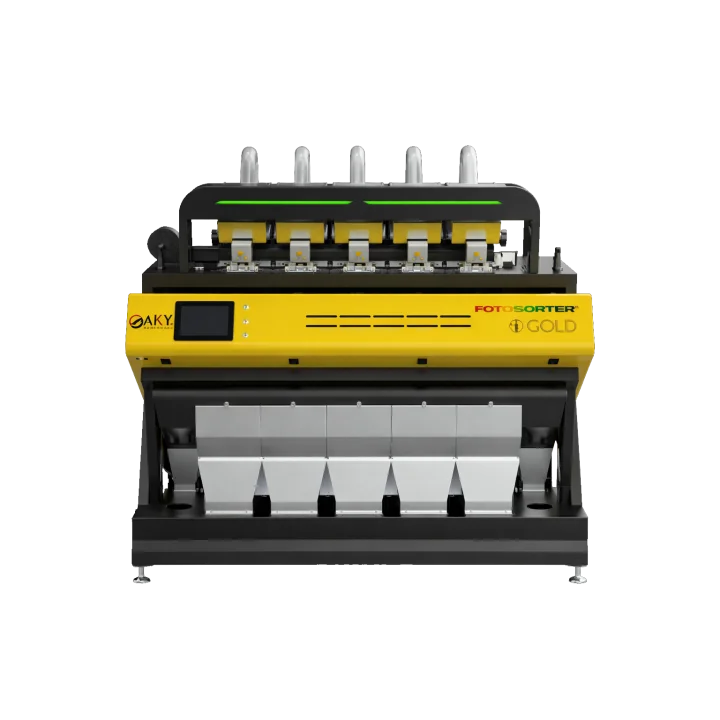
    Depending on the intended use of the final product, additional processing stages can be integrated into the grain cleaning line. Optical sorting by color and external defects makes it possible to separate grains that differ in visual characteristics — damaged, discolored, or with surface damage.

    The processes of grain surface treatment — hulling, polishing, disinfection — are applied in the preparation of food and seed material. These operations improve the product’s commercial appearance and its storage stability.

    Drying and cooling of grain are an integral part of post-harvest processing, ensuring that moisture is brought to safe levels and the temperature of the grain mass is stabilized before storage.

    The final filling and packaging operations complete the technological process, adapting the product to the requirements of the specific sector—from the milling industry to retail bulk seed trade.

    Grain cleaning lines Detail 7
    Grain cleaning lines Detail 8

    Engineering principles of design

    The engineering design of the grain cleaning line focuses on optimizing the sequence and interaction of the machines. Each unit operates in its zone of highest efficiency, which eliminates duplication of functions and ensures stable process conditions at all stages.

    Key engineering factors are the uniformity of material feed, the balanced distribution of airflows, the controlled dynamics of vibrations, and the proper distribution of load among the system units.

    The line functions as a unified transport-technological system, where the machines are connected to one another by bucket elevators, conveyors, and gravity pipelines. Maintaining a uniform material flow is critically important for preventing segregation and ensuring stable quality.

    Dust removal and air management systems are integrated into the design of the line to maintain the cleanliness and safety of the working environment, as well as to ensure the efficiency of aspiration separation processes.

    Automation and process management

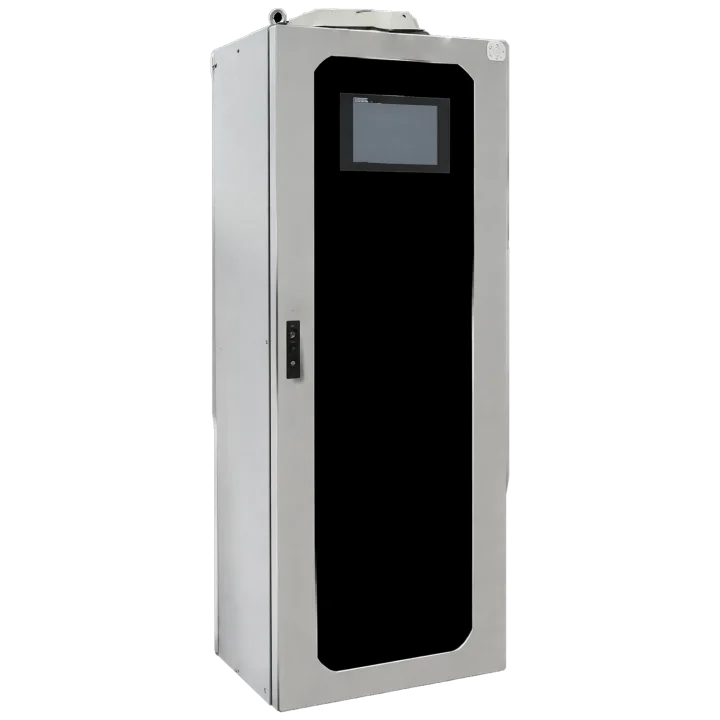
    Modern grain heat-treatment lines are equipped with automated control systems that regulate machine parameters and technological conditions in real time. This makes it possible to maintain stable product quality regardless of fluctuations in the characteristics of the raw material.

    Operators gain the ability to adjust airflows, material feed rate, and equipment settings in accordance with pre-defined recipes for different crops and processing modes.

    Automation ensures repeatability of results and significantly reduces dependence on the skill and attentiveness of the operating personnel. Monitoring systems record key operating parameters and signal deviations.

    The integration of control systems into a unified network makes it possible to carry out remote control, maintain logs of technological parameters, and perform operational diagnostics of the equipment’s condition, reducing downtime and increasing the overall productivity of the line.

    Grain cleaning lines Detail 9
    Learn more
    Home / Agricultural equipment / Grain cleaning lines

    Product Categories

    Pre-Cleaning

    Pre-Cleaning

    Pre-cleaning is the first and key stage of grain processing. It reduces the load on dryers, improves storage quality, and minimizes the risks of self-heating, mold, and crop losses.


    Excell Series

    Excell Series

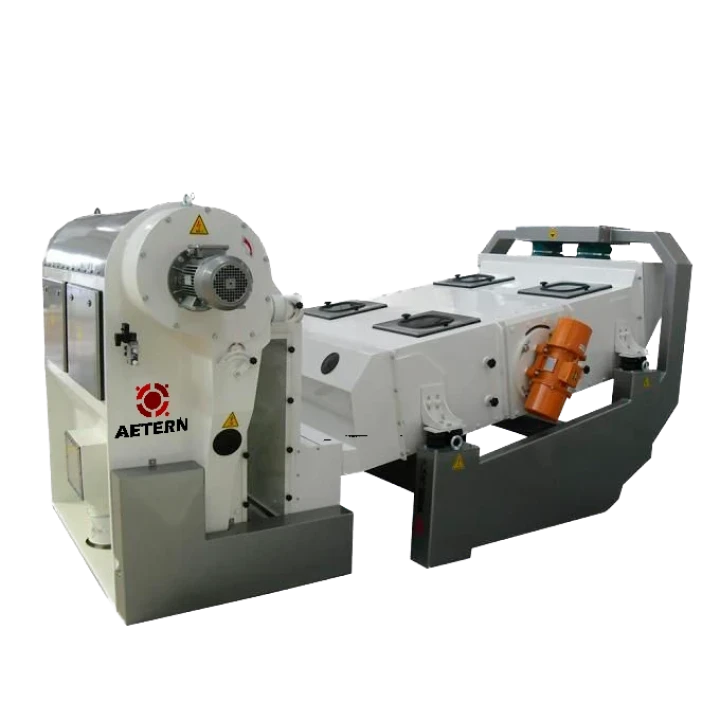
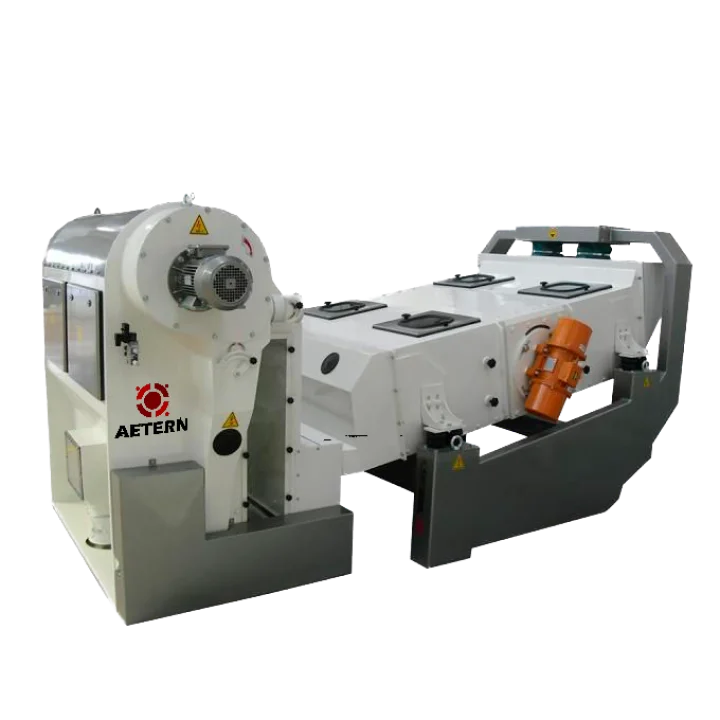
    High-efficiency screen cleaners for pre-cleaning and fine cleaning of grain, seeds, and legumes. They provide stable throughput, precise separation, and product preparation for drying and storage.

    Screening machines

    Screening machines

    Equipment for cleaning, sorting, and calibrating grain, legumes, and seeds by particle size. Sieve separation with vacuum aspiration for high-precision separation. Applied in agriculture, grain processing, and agro-industrial production.
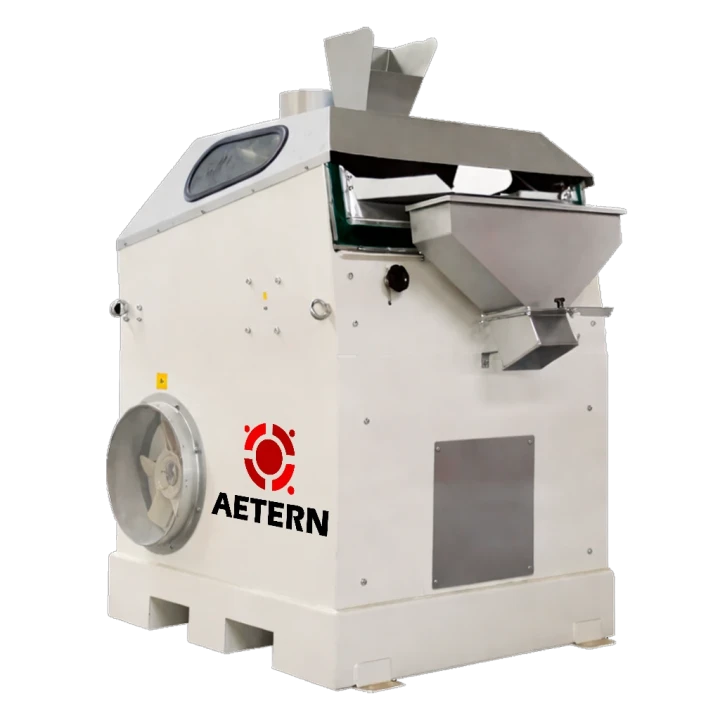
    Stone Separators

    Stone Separators

    Equipment for cleaning grain from stones and other heavy impurities
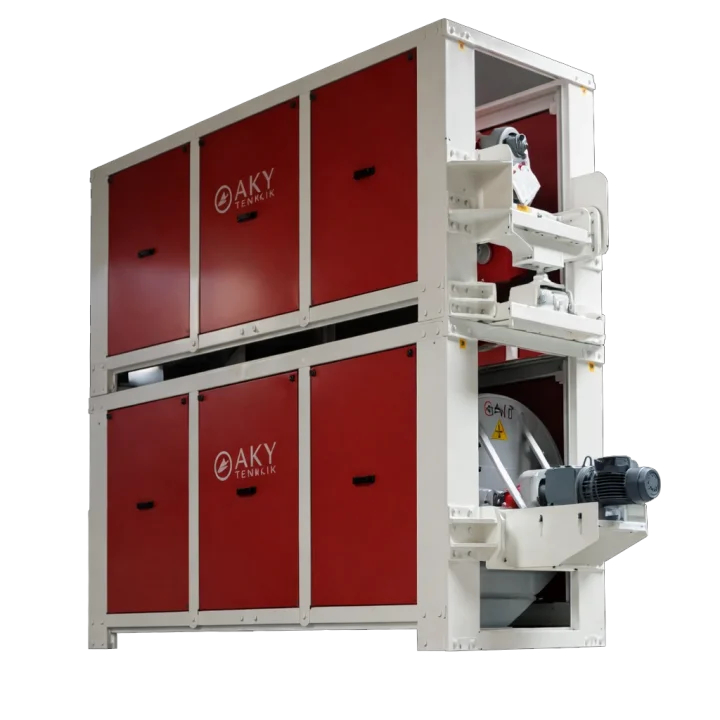
    Cylindrical Triremes

    Cylindrical Triremes

    Indented cylinders for precise cleaning of grain and seeds by particle length

    Vibrating table

    Vibrating table

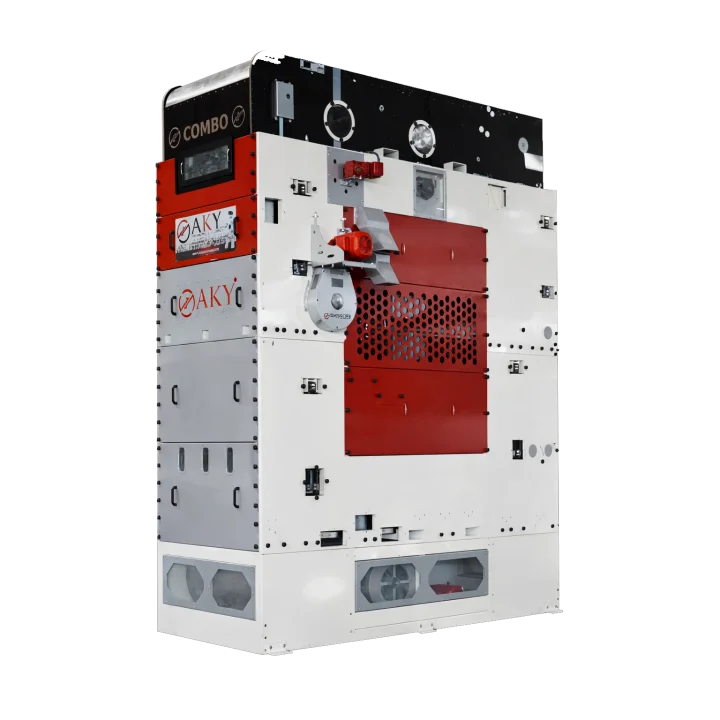
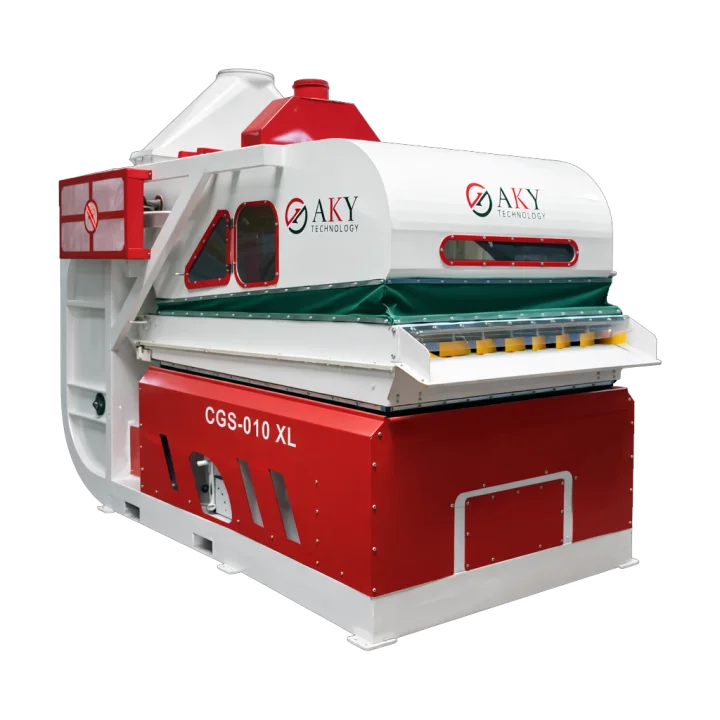
    Gravity separator for final grain cleaning by specific weight

    Seed treatments

    Seed treatments

    Machines for treating, coating, and pelleting seeds as part of seed processing lines.

    Polishing machines

    Polishing machines

    Brush machines for polishing and surface cleaning of seeds, grain, and legumes

    Bagging Machines

    Bagging Machines

    End-of-line weighing and bagging systems for accurate filling and packaging of grain, seed, and bulk materials.

    Dehullers

    Dehullers

    Industrial seed and grain dehulling machines for hull removal, kernel separation, and raw material preparation in processing lines

    Millners

    Millners

    Specialized grain grinding and preparation equipment integrated into processing lines

    Wallnuts Cracking

    Wallnuts Cracking

    Industrial machines for cracking walnuts with an adjustable gap and a high yield of whole kernels

    Choose the right solution

    Explore our product groups to find equipment that fits your needs.

    Equipment for grain cleaning lines

    Loading Products

    feature_filters_title

    no_filters_available

    logo

    HEAD OFFICE

    ул. Эмануила Манолова, 23А / Варна, Болгария / 9010
    +90 537 731 38 61
    info@aeterninvento.com

    Our Solutions

    • Grain dryers
    • Heat generators
    • Grain cleaning lines
    • Garden protection
    • Electric generators

    Menu

    • Home
    • Who We Are?
    • Our Solutions
    • Contact Us
    • Term of Use
    • |
    • Privacy Policy
    • |
    • Security Policy
    • |
    • AETERN INVENTO ALL RIGHTS RESERVED

    Request Quote

    quote_success
    form_error