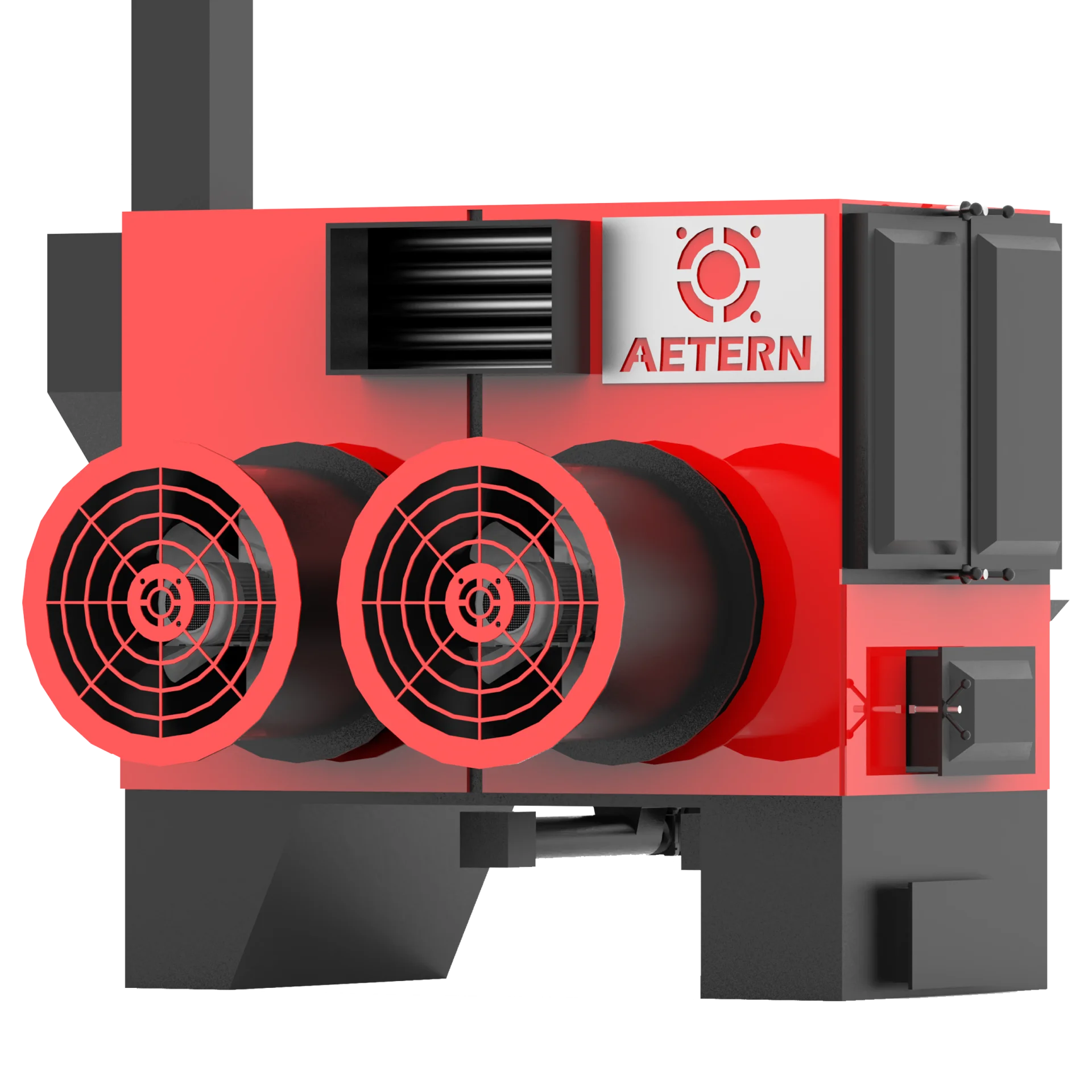
Indirect solid-fuel heating: a clean drying medium and stable temperature
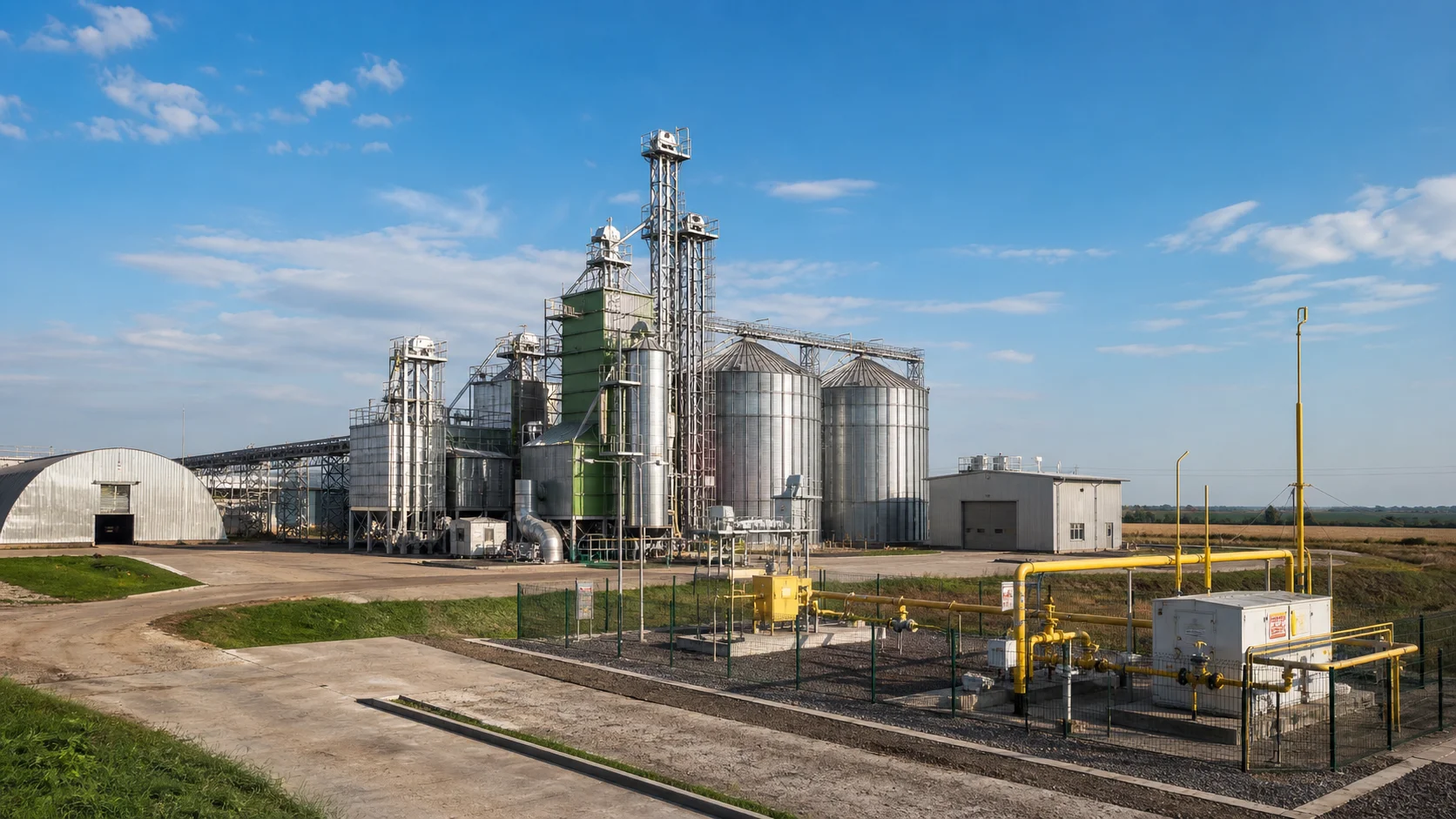
A heat generator in a grain-drying complex forms the drying medium — a flow of hot air of a specified volume and temperature. The heating method and correctly chosen power determine the quality and uniformity of drying: in unstable operation the risk of moisture fluctuations and grain damage increases. In this article we examine the principle of operation of the heat generator, the key differences between direct and indirect heating, and the logic for selecting power to match the capacity of the grain dryer.
Why the Heat Generator Matters for Drying Results
In a drying complex it is the heat generator that forms the drying medium: a flow of hot air of the required volume and temperature. How correctly this flow is 'assembled' at the outlet affects not only the speed but also the predictability of the process — how evenly moisture will be removed from the entire mass of grain.
Stability of temperature and airflow is a practical measure of the unit's performance. When the regime is steady, drying is more uniform and the risk of moisture swings and grain damage is reduced. If the temperature 'wanders' in response to combustion and fuel loading, the result becomes uneven and harder to control.
When selecting equipment it is usually important to answer two basic questions. First — how clean will the drying medium be: for grain it is essential that the working air contain no combustion by-products. Second — does the heat generator's power match the throughput of the drying complex, so as to provide the required volume of hot air without shortages or excessive operating modes.
It is more correct to assess the project's economics with reference to the available fuel and its logistics at the specific site: this directly affects the cost of hot air during the season. Detailed analysis of the energy market and drying costs is presented in a separate study that you can find below in the related articles
Direct and Indirect Heating for Grain
Comparison criterion
Direct heating
Indirect heating
Mixing of streams
Combustion products flow together with the working air and are effectively mixed.
Flue gases and working air are separated: heat is transferred through a heat exchanger without mixing.
Quality of the drying agent
The outgoing air contains traces of flue gases, which reduces the purity of the working stream.
The output is clean hot air without combustion products.
Contact with grain
Grain contacts air containing combustion products, which is undesirable for quality.
Grain contacts only clean hot air, without exposure to flue gases.
Temperature stability
Temperature more closely follows the combustion regime and can fluctuate during operation.
The temperature of the outlet air is maintained more stably due to the separate circuit and control.
Where appropriate
Suitable for heating spaces and processes where air purity is not critical.
Suitable for grain drying complexes and other processes where the purity of the drying agent is important.
Conclusion for the grain dryer
Risky for grain due to impurities in the stream and direct contact with combustion products.
Required for a grain dryer: grain must be dried with clean hot air free of flue gas contamination.
Comparison of methods for heating the drying agent with respect to grain drying; conclusion — indirect heating is required for a grain dryer.
Power range of CHG heat generators for Graindryers
Model
ккал/ч
кВт
CHG-300
300000
348
CHG-500
500000
580
CHG-700
700000
812
CHG-850
850000
986
CHG-900
900000
1044
CHG-1000
1000000
1160
CHG-1250
1250000
1450
CHG-1500
1500000
1740
CHG-1800
1800000
2088
2×CHG-1000
2000000
2320
2×CHG-1250
2500000
2900
2×CHG-1500
3000000
3480
2×CHG-1800
3600000
4176
Max. temperature of the outlet air—135°C. Data according to the CHG series specifications. Thermal power is selected according to the throughput of the grain drying complex; the principle of indirect heating and its operation remains the same across the entire range.Configurations 2×—parallel installation of two modules.
How the CHG Series Works Within a Complex
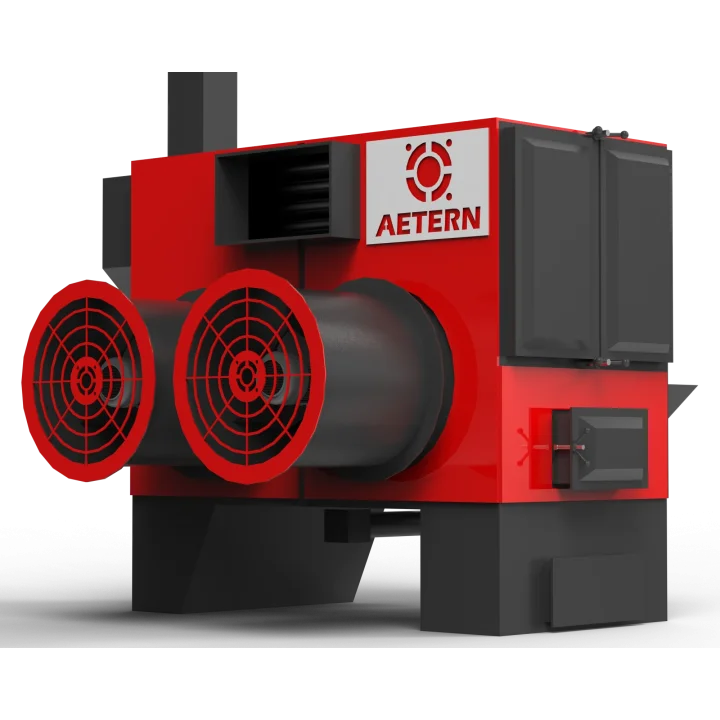
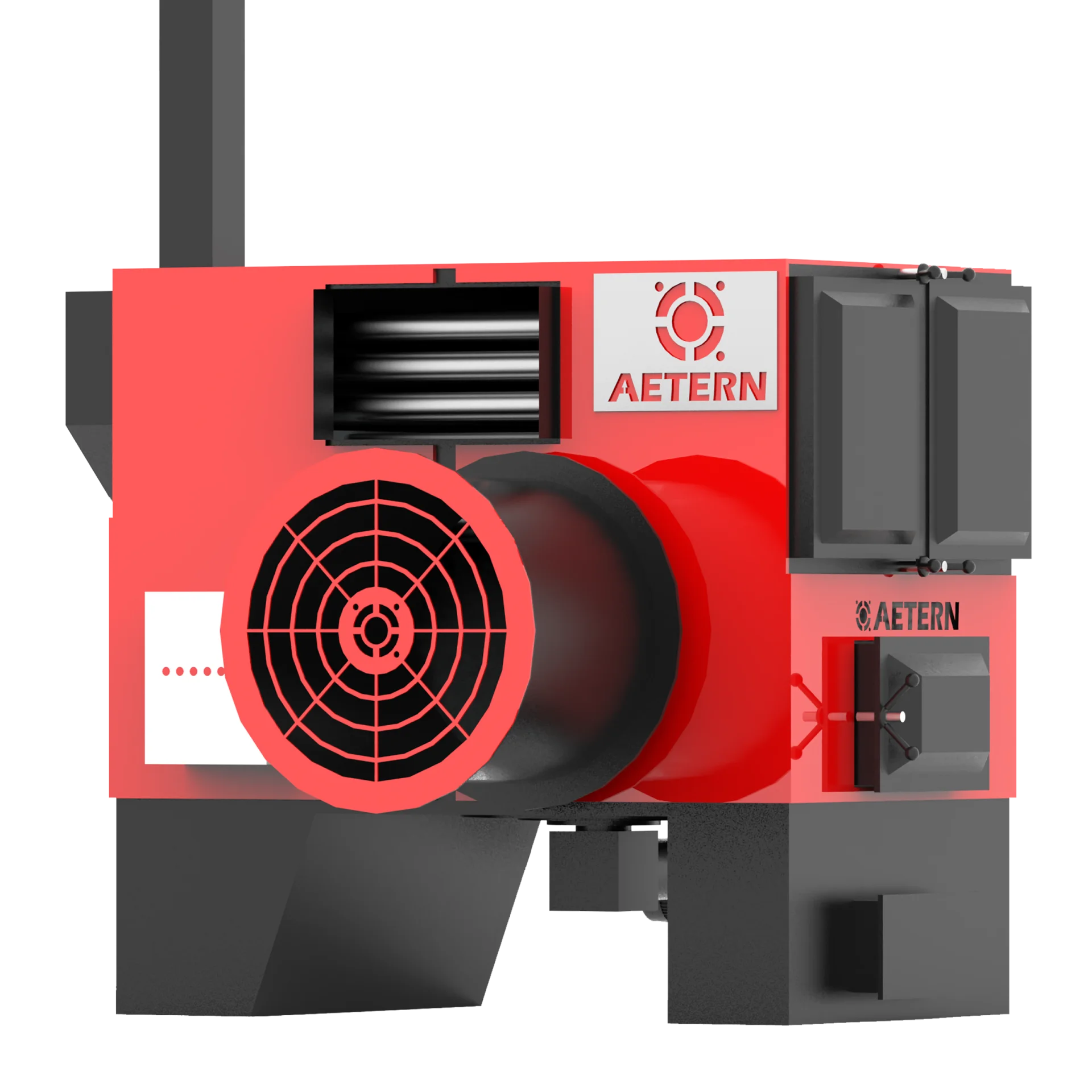
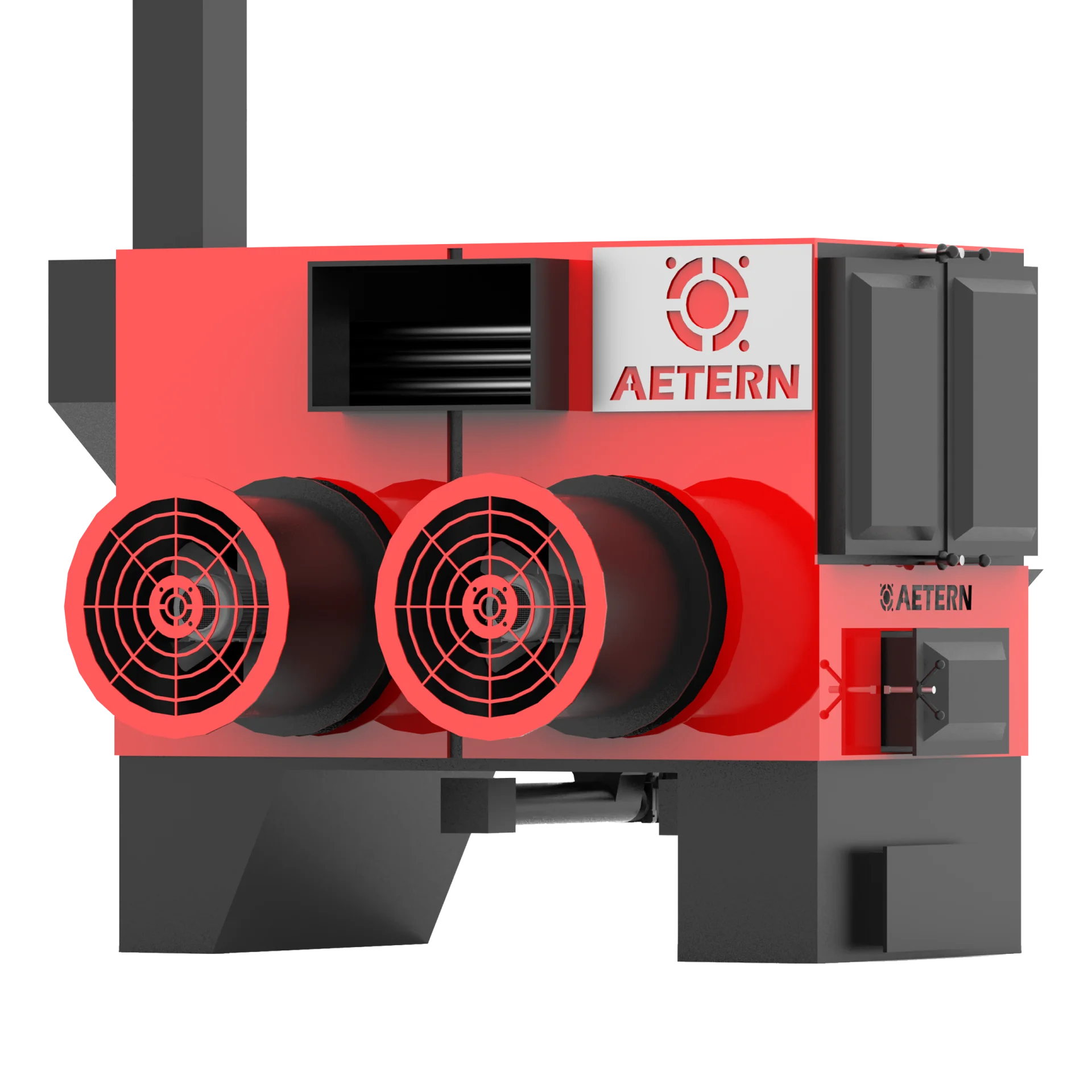
CHG series heat generators in a grain-drying complex operate as a single unit: the combustion chamber produces heat, the heat exchanger transfers it to the process air, and the fan unit shapes and delivers the flow into the drying system. The key feature of this design is indirect heating: combustion products travel in a separate path and do not mix with the process air, so the output is clean hot air suitable for contact with grain.
Inside the unit these elements are linked not as isolated sequential components, but as one system designed for the full cycle — from fuel loading and combustion to producing the finished drying agent. The heat exchanger takes on the thermal load from the flue gases, and the air path is organized so that the fan forces a stable volume of air through the heated zone, ensuring uniform heating without ingress of combustion impurities.
Parameter stability during the working cycle is maintained by the control system: it regulates fuel feed and combustion intensity and coordinates them with the unit's operation so that the temperature and volume of the outgoing flow do not "float" with the firing regime. For a grain dryer this is a practical criterion: the more uniform the temperature and air flow, the more predictable the moisture reduction throughout the grain mass and the lower the risk of local over-drying or under-drying.
The series is designed for long-term intensive operation with regular fuel loading and is intended for solid fuels of fine and medium fraction — pellets, wood chips, agricultural waste and firewood. The specific choice depends on the model, configuration and on what resources are available on site. Ultimately the design addresses the farm's main task: to provide the grain-drying complex with a predictable source of clean hot air on which a stable drying regime can be built during the season.
Conclusion: criteria for choosing a heat generator
When choosing a heat generator for a grain-drying complex, process requirements should take priority over ease of connection or a familiar layout. The basic requirement for grain is indirect heating: combustion products are separated from the working air by a heat exchanger, so the grain is exposed to clean hot air without combustion gas impurities.
The second key criterion is stability of the outlet temperature regime. The more consistently the set temperature and the air flow volume are maintained throughout the cycle, the more predictable the drying and the lower the risk of uneven moisture and grain damage due to temperature spikes.
The third selection point is matching the power to the capacity of the drying complex: the heat generator must provide the required volume and temperature of the drying agent for your process task. The CHG series scales from compact applications to large facilities, and for the upper power range offers configurations with two modules installed in parallel.
Finally, it is worth considering in advance the available on-site fuel supply and fuel logistics: these determine the practicality of operation and the predictability of costs during the season. At the same time, it is more correct to verify the detailed economics of a specific project against separate industry analysis, including the b2b-agro study on the energy market and the cost of grain drying.
Request heat generator selection for a grain dryer
If you are planning an upgrade or commissioning of a grain-drying complex, the AETERN team can help select a heat generator configuration for your capacity and available solid fuel. We will clarify the initial data on operating modes, requirements for the drying agent and site conditions in order to propose an appropriate equipment option without promises regarding timelines, price or final efficiency. Submit a request — we will get in touch and discuss the details.